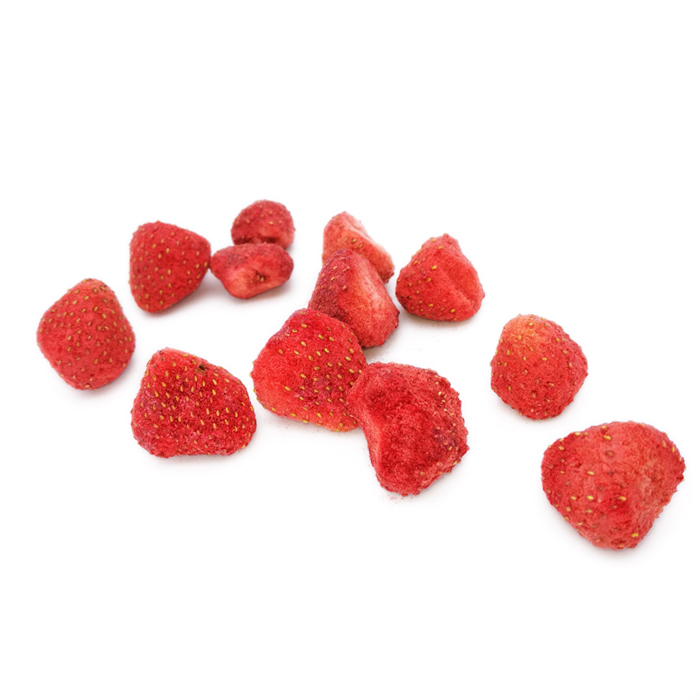
product
Are freeze dried fruits healthy

The Nutritional Blueprint: Why Freeze-Dried Fruit is a Masterclass in Food Preservation
For years, we’ve been told that "fresh is best." But in our fast-paced, globalized world, "fresh" produce often spends weeks in transport, losing vital nutrients every hour it sits on a shelf. Enter freeze-drying: a sophisticated cold-dehydration process that doesn't just "dry" fruit, but effectively "pauses" its biological clock.
When we ask if freeze-dried fruit is healthy, we aren't just looking at calories—we’re looking at phytonutrient integrity and bioavailability.
Locking in the "Life Force": Enzymatic Integrity
Most people don't realize that fruits are "alive" after being picked, continuing to breathe and break down their own vitamins through oxidation. Traditional drying uses heat, which acts like a hammer, smashing delicate molecular structures.
-
Antioxidant Shield: Research indicates that polyphenols and anthocyanins (the pigments that fight inflammation) remain almost entirely intact during freeze-drying because the process occurs in a near-vacuum, preventing oxygen from degrading the fruit.
-
Enzymatic Activity: Because the fruit is never "cooked," many of the natural enzymes that aid in digestion remain active, a feat that canned or heat-dried fruits cannot achieve.
-
Molecular Stability: The cellular "skeleton" of the fruit is preserved. When you eat it, your body recognizes the fiber and sugar in the same way it does fresh produce.
Nutrient Decay: Why Freeze-Dried Might Beat "Store-Bought Fresh"
Fresh fruit is only at its peak the moment it’s harvested. By the time it reaches your kitchen, its nutritional profile may have dipped significantly.
| Nutrient Category | Fresh (After 7 Days Travel) | Freeze-Dried (At 6 Months) | Canned Fruit |
| Vitamin C | 40% - 60% Loss | <10% Loss | 50% - 80% Loss |
| B Vitamins | Moderate Decay | Stable / Preserved | High Loss (Heat sensitive) |
| Antioxidants | Significant Oxidation | Minimal Oxidation | Significant Decay |
| Fiber Structure | Softens / Breaks down | Perfectly Retained | Partially Degraded |
| Preservatives | None | None | Often contains Syrups/BPA |
The "Clean Label" Revolution: No Sulfites, No Sorrows
If you look at the back of a bag of traditional dried apricots, you’ll likely see Sulfur Dioxide. This preservative is used to keep the fruit from turning brown, but it can trigger asthma and digestive issues in sensitive individuals.
Freeze-drying requires zero chemicals. The removal of $98\%$ of the water is a natural preservative in itself. This makes it a gold-standard snack for:
-
Clean-label enthusiasts looking for single-ingredient foods.
-
Toddlers and children who need the nutrients of fruit without the added dyes or sugars found in "fruit snacks."
-
Allergy-prone individuals who need to avoid the sulfites found in sun-dried or tunnel-dried products.
Smart Consumption: The Fiber-to-Sugar Ratio
The healthiness of freeze-dried fruit ultimately depends on how you use it. Because the water is gone, the fiber-to-volume ratio changes.
-
Gut Health: One of the biggest health wins is the concentrated fiber. It acts as a prebiotic, feeding the beneficial bacteria in your microbiome.
-
Glycemic Response: Because the fiber is intact (unlike in fruit juice), the sugar is absorbed more slowly. However, because the fruit is so light, it’s easy to eat the equivalent of three apples in five minutes.
The Expert Guide Tip: To maximize the health benefits, pair freeze-dried fruit with a source of healthy fat or protein—like Greek yogurt or a few raw almonds. This further slows the absorption of the natural sugars and creates a more balanced metabolic response.