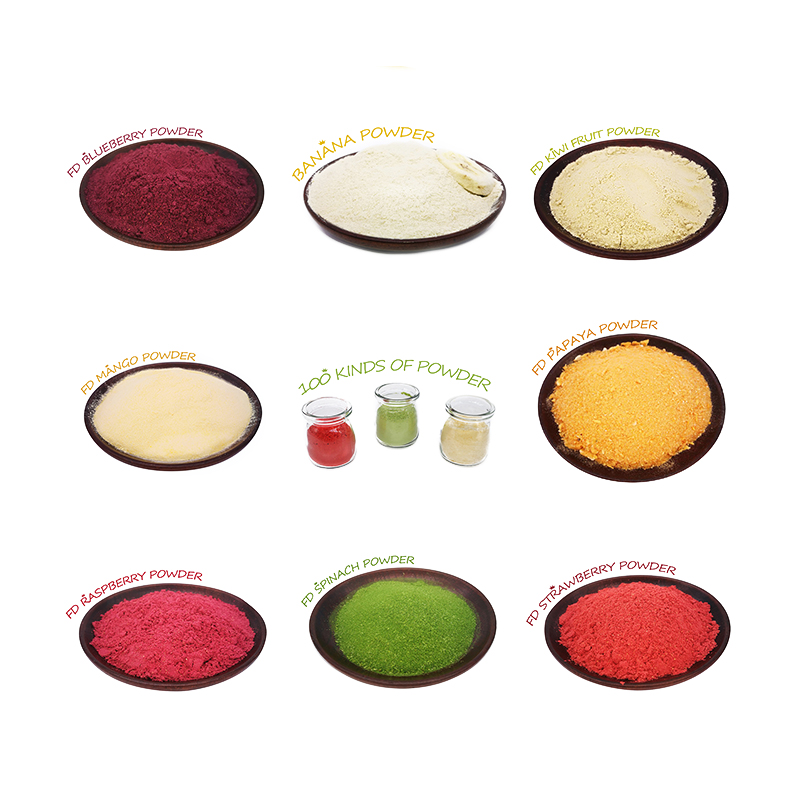
product
Mastering Dry-Mass Concentration: The Technical Impact of Fruit Solids in Baking

From a food science perspective, freeze-dried fruit powder is categorized as a highly hygroscopic functional ingredient. When formulating a recipe, bakers must treat these powders not just as flavorings, but as dry solids that interact with the hydration and acidity of the overall system. Understanding the concentration factor is essential for maintaining consistent results in high-volume production.
The Concentration Factor ($C_f$)
Freeze-dried powder is typically $10 \times$ to $15 \times$ more concentrated than fresh fruit. This means that adding 30g of powder is roughly equivalent to adding 300g–450g of fresh fruit solids. This concentration affects two major areas:
-
Hygroscopy (Moisture Absorption): Fruit powders are thirsty. They will pull moisture from the eggs and butter in your batter. If you add a significant amount of powder, you must incrementally increase your liquid components to prevent a dry, crumbly crumb.
-
pH and Leavening: Many fruits (especially berries and citrus) are naturally acidic. Introducing these powders can shift the pH of your batter, which may over-activate baking soda, leading to an initial high rise followed by a collapse.
Substitution and Ratio Analysis
| Target Result | Substitution Ratio | Structural Adjustment |
| Flavor Intensity | 2–3% of total flour weight | No adjustment needed. |
| Natural Color | 5–8% of total flour weight | Increase liquid (milk/water) by 5%. |
| Sugar Replacement | 1:1 for Powdered Sugar | Reduce total sugar by 5% (due to natural fructose). |
| Acidic Balance | N/A | Add 1/8 tsp Baking Soda to neutralize excess fruit acid. |
Storage and Stability Challenges
The primary technical hurdle with fruit powder is its surface area. Because it is finely ground, it is prone to rapid oxidation and moisture absorption from the air. To maintain the enzymatic integrity and color of the powder, it must be stored in oxygen-barrier packaging with desiccant packs. In professional settings, vacuum-sealing the powder after every use is recommended to prevent "clumping," which occurs when the sugars in the powder reach their glass transition temperature and turn into a sticky solid.